
About the Center
The Mediation and Dialogue Research Center (MDRC) at the National University of Kyiv-Mohyla Academy is a research-based think tank. We generate high-quality academic and policy research that shapes conflict transformation efforts in Ukraine and the broader region. The MDRC connects international organizations, diplomats, academics and civil society by creating space for academic research and practitioner experience to inform, challenge and transform each other.
Founded in 2017, the MDRC researches topics related to Russian aggression against Ukraine before and after the full-scale invasion of 2022, including but not limited to:
- Approaches to peacebuilding within interstate wars of aggression;
- Mediation and dialogue as conflict transformation tools;
- Track-two dialogue;
- Multi-track approaches to mediation and peace processes;
- Art and peacebuilding;
- Civil society inclusion in peace negotiations;
- Mapping Ukrainian civil society contributions to peacebuilding;
- Evaluating dialogue impact;
- Methodologies of conflict-analysis and conflict-sensitivity analysis.
In addition to conducting research, MDRC members teach conflict resolution, mediation and negotiation courses at the National University of Kyiv-Mohyla Academy as well as other Ukrainian and European universities.
Since 2022, the Center has partnered with the Ukrainian Community of Dialogue Practitioners (UCoDP) and is a member of the international Mediation Support Network.
News

Tetiana Kyselova in co-authorship with Olha Krasovska has published a “Guide for Evaluation of Facilitated Dialogues” as part of the project “Building Dialogue and Mediation Capacity for Conflict Prevention and Resolution,” implemented by the OSCE Support Program for Ukraine in co-operation with the National Agency of Ukraine on Civil Service, the Secretariat of the Cabinet of Ministers of Ukraine, and the National Association of Mediators of Ukraine with financial support from the OSCE participating States and partners. The Guide presents a bottom-up approach for evaluating facilitated dialogue processes, developed by Ukrainian experts based on practical experience. It offers practical tools for assessing the quality, outcomes, and impact of dialogue initiatives and is intended for dialogue practitioners, evaluators, donors, international and local civil society organizations working to strengthen social cohesion and resilience in Ukraine.
guide
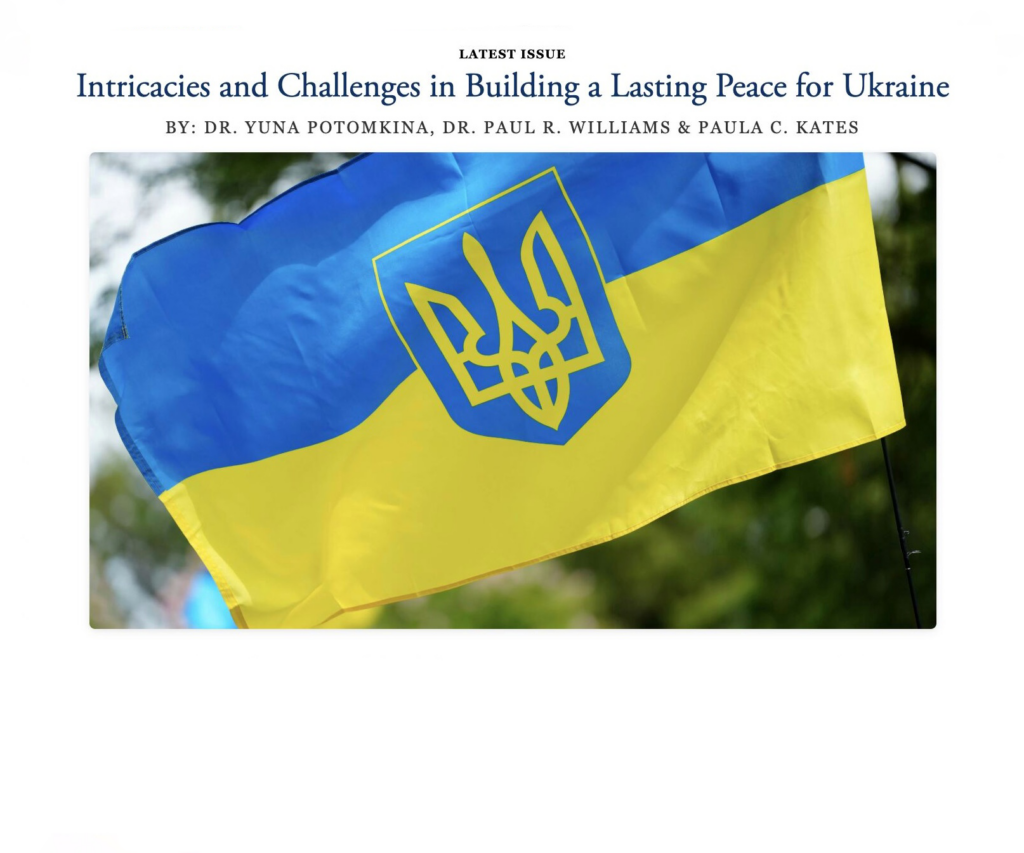
Yuna Potomkina co-authored an article “Intricacies and Challenges in Building a Lasting Peace for Ukraine”. The article analyzes the complex history and critical challenges of peace negotiations between Ukraine and Russia, covering the period from the annexation of Crimea in 2014 to diplomatic efforts in 2025. The authors examine the reasons for the failure of previous agreements, such as the Minsk Protocols and the Istanbul Communiqué, pointing to Moscow’s manipulative strategy and the lack of effective enforcement mechanisms. The text emphasizes that sustainable peace is possible only if Ukraine plays a leading role in the negotiation process and civil society is actively involved.
article
Tetiana Kyselova in co-authorship with Vera Axyonova has published an article “Jenseits hochrangiger Diplomatie: Die OSZE und innergesellschaftlicher Dialog in der Ukraine” (in German). The article explores ten years of fruitful cooperation of Ukrainian mediators and dialogue facilitators with the OSCE Project Coordinator Office to promote dialogue culture in Ukraine to foster social cohesion, and support national reforms. Despite the challenges posed by Russia’s full-scale invasion in 2022, it remains critically important to continue such initiatives for maintaining societal resilience and effective post-war recovery in Ukraine.
article
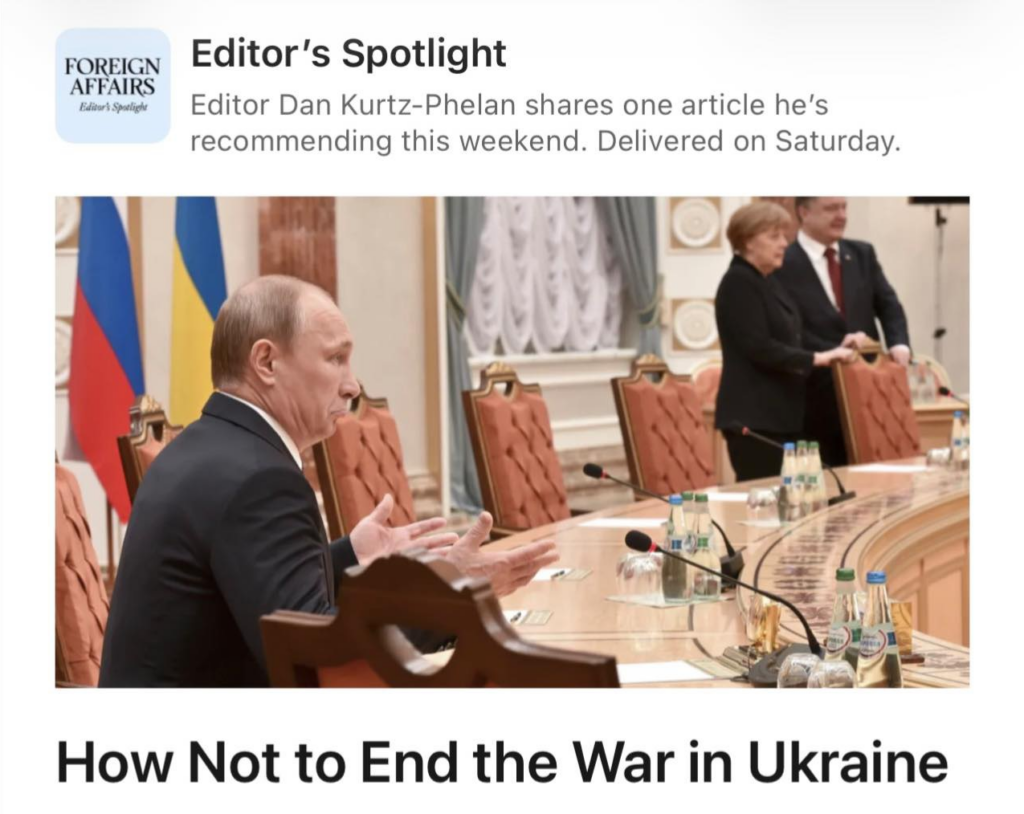
Our Minsk article was recognized as an Editor’s spotlight by Foreign Affairs. In March 2025, Yuna Potyomkina and Tetiana Kyselova published an article, “How Not to End the War in Ukraine,” in which we examined the bitter mistakes of the Minsk negotiation process and the agreements. A year later, the findings remain, unfortunately, even more relevant. The agreement that President Trump is pushing for is likely to repeat many Minsk mistakes and be even more problematic, if it is going to be at all.
article
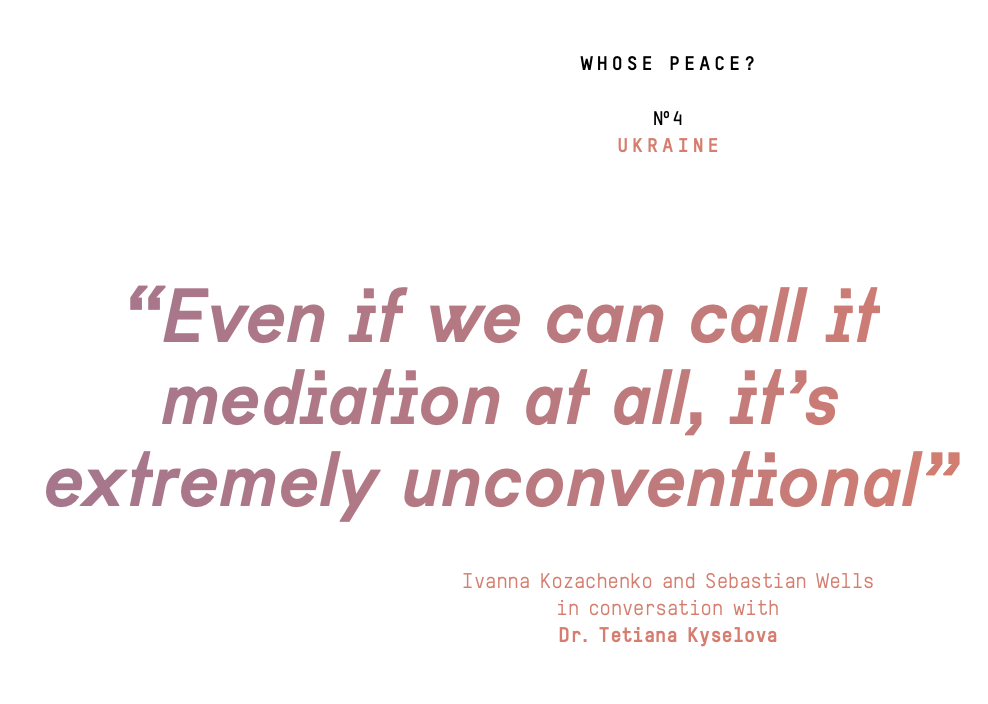
Tetiana Kyselova gave an interview to Solomiya Magazine No. 5—After Now, where she reflected on the evolving landscape of peace negotiation efforts in the context of the Russian aggression against Ukraine. The interview explains why the current negotiation processes surrounding the war are unprecedented, unconventional, and often ineffective. In the conversation, Tetiana Kyselova emphasizes that without security guarantees and conditions that would compel Russia to negotiate in good faith, diplomatic efforts will be extremely difficult. She also stresses that true peace for Ukraine means not only a ceasefire, but the preservation of statehood, Ukrainian identity, and guarantees of non-recurrence of aggression.
interview